Habitelligence surveyed 507 U.S. homeowners to understand how ready they are for bidirectional EV power — using a vehicle not just to drive, but to run devices, back up a home, or offset rising energy costs. Among fully electric owners, the capability is already common and used: 71% say their EV can power devices directly, and of those, nearly 9 in 10 use it at least occasionally, most often for backup power during outages (74%) and outdoor activities like camping or tailgating (64%).
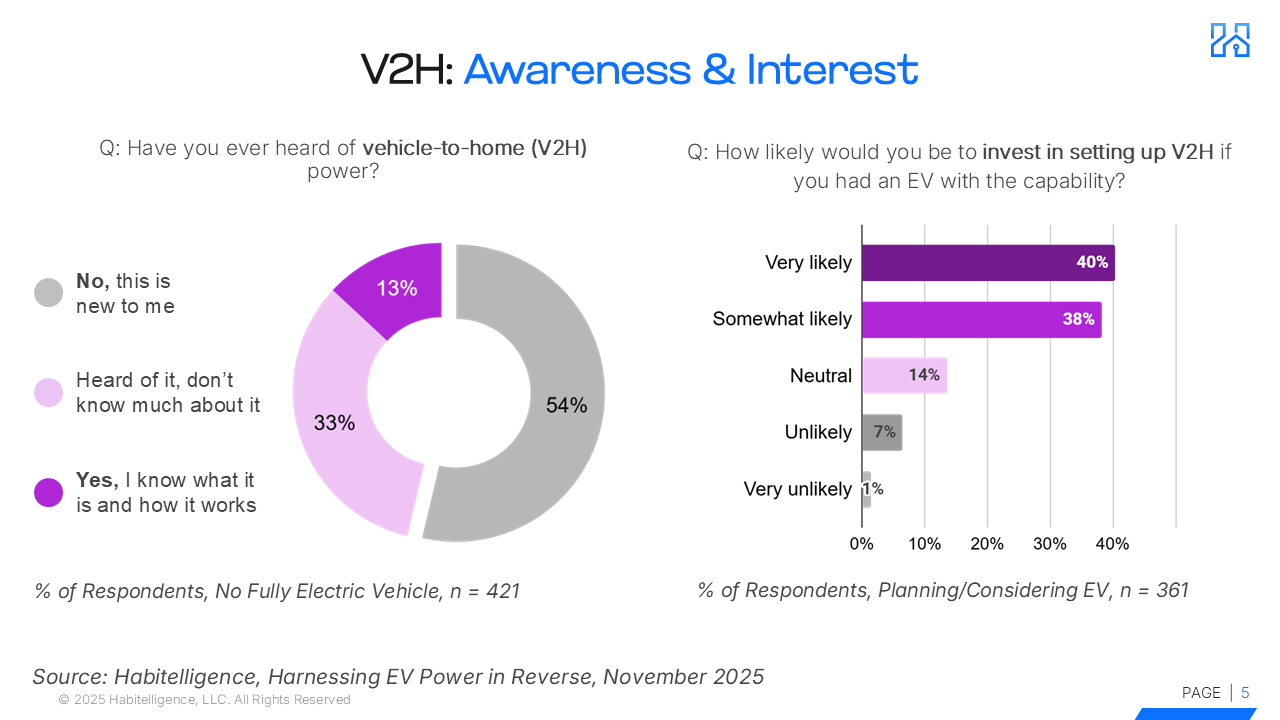
Awareness of full home backup (V2H) tells a different story. More than half of prospective EV buyers (54%) have never heard of it, and just 13% understand how it actually works. Yet once the concept is explained, interest jumps: 78% of homeowners planning or considering an EV say they'd be very or somewhat likely to invest in setting it up. What moves that interest forward most is lower installation costs or incentives (72%), bundling the setup with the EV purchase (56%), and clearer information from automakers or installers (51%) — while most homeowners cap their willingness to spend under $3,000 in extra equipment and electrical work.
Reach out to Habitelligence or schedule a strategy briefing to learn more.

Schedule a Market Intelligence Briefing
Explore the strongest signals in homeowner sentiment and experience, and what they could mean for your market. This concise strategy update shares a broader selection of findings from the Home Energy Landscape survey—along with insights you can put to work in product positioning, partnerships, and messaging.